Girgaon, Mumbai, Maharashtra 400004, India [email protected] +91 9869506920

Blog

7 Tips for Choosing a Stainless Steel Slip On Flange

7 Tips for Choosing a Stainless Steel Slip On Flange

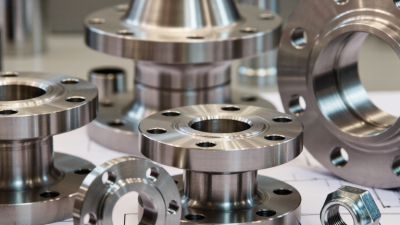
Choosing a Stainless Steel Slip On Flange is not simply a matter of matching pipe size. A bright flange can still be the wrong flange. Pressure class, wall thickness, gasket type, bolt load, corrosion exposure, and welding access all influence service reliability. The International Stainless Steel Forum reported global stainless crude steel production of about 58.4 million tonnes in 2023. That scale reflects stainless steel’s continuing importance, but it does not remove the need for careful selection. John H. Bickford, a recognized authority on bolted-joint engineering, stated, “The reliability of a bolted joint depends on design, assembly, and service conditions.” This principle applies directly to flange connections. A 6-inch Class 150 flange may look suitable on a workshop bench, yet temperature changes, vibration, or an unsuitable gasket can create leakage in operation. Small details matter. This guide presents seven practical tips for selecting a Stainless Steel Slip On Flange. It considers ASME B16.5 dimensions, ASTM A182 material grades, facing options, corrosion resistance, and installation control. It also highlights traceability and supplier documentation, including heat numbers and pressure ratings. These checks are not glamorous. They prevent expensive surprises. The process is not perfect. Standards may be misunderstood, and catalogue descriptions can hide important limitations. Therefore, compare the flange with the complete piping system, not a single drawing. A reliable choice begins with verified data, experienced review, and honest questions about actual service conditions.
Read more »
Elowen By:Elowen - October 20, 2026
10 Best ASME B16.9 Buttweld Fittings Suppliers

10 Best ASME B16.9 Buttweld Fittings Suppliers

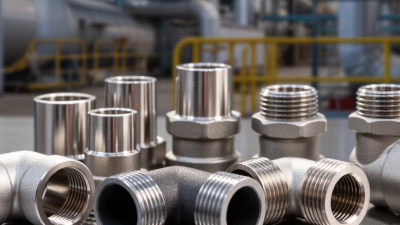
Choosing reliable ASME B16.9 Buttweld Fittings suppliers requires more than comparing prices or browsing polished websites. These fittings connect critical piping sections, where poor dimensions, weak welds, or incomplete documentation can create costly problems. A dependable supplier should understand material grades, wall thickness, pressure requirements, and installation conditions. This guide reviews 10 Best ASME B16.9 Buttweld Fittings Suppliers using practical purchasing criteria. The evaluation considers manufacturing experience, product consistency, dimensional control, inspection procedures, and certification support. It also examines material traceability, testing records, packaging quality, delivery performance, and technical communication. Small details matter. Clean bevels, accurate elbows, and readable heat numbers can simplify site work. The best supplier is not always the cheapest. A strong catalog does not prove reliable production. Buyers should request current certificates, sample inspection reports, and clear tolerance information before placing large orders. Supplier references can also reveal how a company handles delays, replacements, and unexpected specification changes. This review aims to provide a useful starting point, not an unquestionable verdict. Some information may change, and certain claims still require direct confirmation. That limitation deserves attention. Procurement teams should match each supplier’s capabilities with project standards, operating temperatures, corrosion risks, and required delivery schedules. Careful verification remains essential, especially for power, chemical, oil and gas, and industrial processing applications.
Read more »

Elowen By:Elowen - October 20, 2026
Why Choose ASME B16.5 Weld Neck Flange?

Why Choose ASME B16.5 Weld Neck Flange?

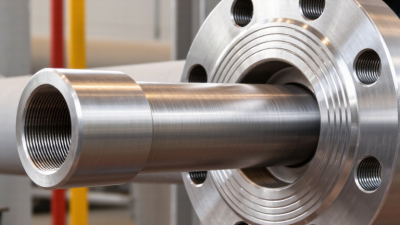
Why Choose ASME B16.5 Weld Neck Flange? In high-pressure piping, connection design can decide whether a system remains stable or suffers repeated leakage. The ASME B16.5 Weld Neck Flange is engineered for demanding process, petrochemical, power, and refinery applications. Its tapered hub transfers stress gradually into the pipe. This reduces local turbulence and bending near the weld. ASME B16.5:2022 defines pressure-temperature ratings, dimensions, materials, facing types, and bolting requirements. ASME B31.3 also emphasizes qualified design, fabrication, examination, and testing for process piping. These standards provide structure, not magic. Industry evidence supports careful flange selection. The American Petroleum Institute’s API 574 inspection guidance highlights corrosion, misalignment, gasket damage, and bolt condition as recurring piping concerns. DNV’s integrity reports similarly connect reliability with inspection quality, maintenance discipline, and human factors. A perfect flange can still fail after poor alignment. That detail is easy to overlook. Mohinder L. Nayyar, author of the Piping Handbook, expressed a practical principle: “Piping reliability begins with disciplined design and construction.” His point fits this flange choice closely. A long tapered hub, visible weld preparation, and controlled bolt tightening create tangible installation advantages. You can see the difference beside a pump nozzle or hot process line. However, choosing ASME B16.5 Weld Neck Flange solely by pressure class is incomplete. Material compatibility, thermal cycling, pipe schedule, gasket selection, and welding procedure also matter. The weak point may be the installation, not the flange. That deserves honest review.
Read more »
Elowen By:Elowen - October 20, 2026